


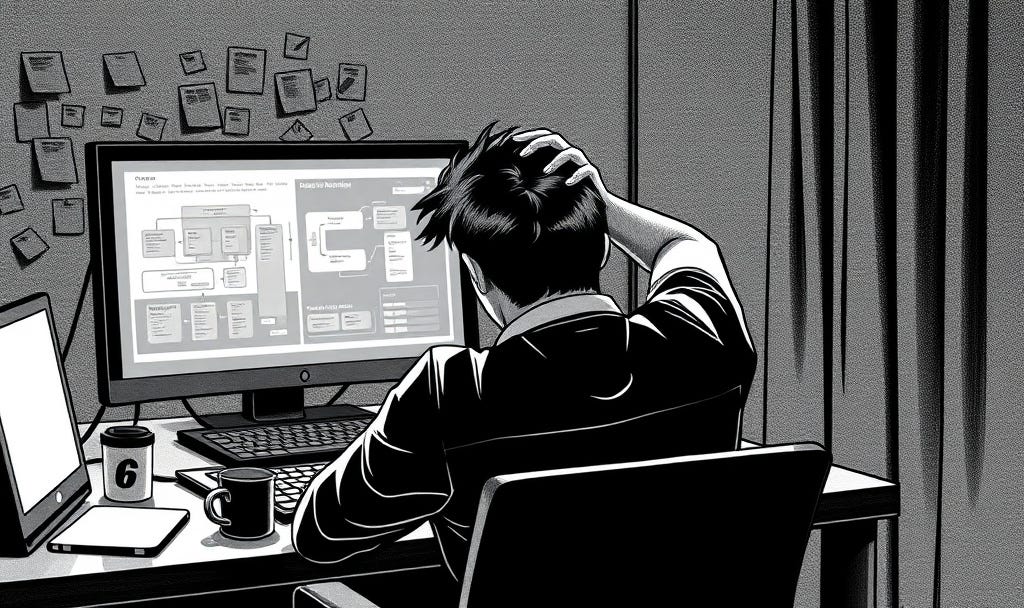
AI gurus never talk about this problem
2 weeks ago I was sitting down with a new client project.
Marketing automation pipeline for a company with both B2B and B2C customers coming in through their website and existing CRM. n8n, Supabase, a handful of API integrations. Nothing new on paper, but complex enough that one wrong connection would break the whole thing.
My old self would have opened n8n immediately and started laying out workflows.
It’s fast, sure. But not on complex builds.
I know because I did exactly that so many times. And every single time I paid for it. Not in money, but in hours spent refactoring the workflows or going back to change things I’d already built because I hadn’t thought through how they connected.
That specific frustration of realizing mid-build that the structure you chose was wrong, and now you have to unravel it.

I realized that the problem was never the code.
I lost 90% of the time on a build just because the architecture sucked.
I never sat down and planned the thing from start to end, at least on a high level.
So this time I stopped before taking any action. Just sat there for a moment at my desk and asked myself: what actually needs to happen before I write a single line?
What I did
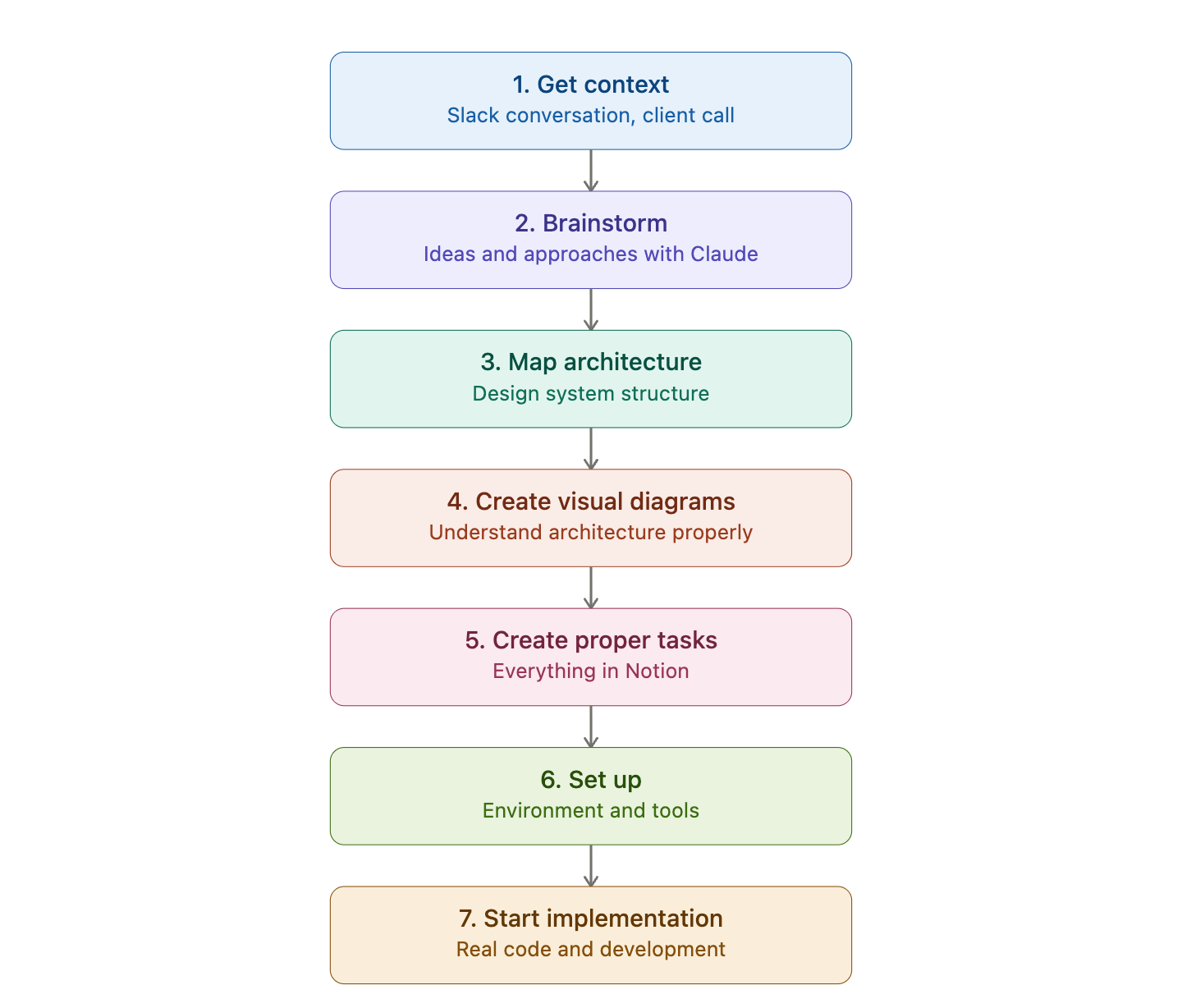
The first thing I did was connect Claude → Slack. All my conversations with the client were already there. Instead of prompting the brief from scratch, Claude could just read the actual thread. The real words the client used, the back and forth, the things they kept emphasizing. That context matters more than people think.
Then we started brainstorming. And I mean really working through it, not “give me a plan” and copy-paste whatever comes back. Going deep on the questions that actually matter: what does this pipeline need to do at every step? Where does data move? What happens when something breaks? What are the edge cases nobody mentioned yet?
I burned through my entire Claude Pro session doing this. This is me waiting for the limit to reset:

It took about two to three days to map it all out properly. That might sound long for a planning phase. But here’s what happened during those sessions: I found gaps I had no idea existed. Things that were completely invisible to me until I started asking the right questions out loud, with Claude pushing back and helping me think. Issues I would have hit halfway through the build, at the worst possible moment, when changing them would have cost me hours.
We put everything into a structured architecture document in Notion as we went. Not a rough sketch. A proper reference for the whole system.
After that I needed to actually see it. So I used a Claude skill to generate diagrams of the full pipeline. Components laid out, data flows mapped, dependencies visible. There’s a big difference between understanding something in your head and being able to look at it on a page and spot what’s off.
Last thing before opening any tool: a todo list. Every workflow to build, every credential to request from the client, every API to connect. Exact steps, exact order. No pausing mid-build to figure out what comes next.
By the time I actually started building, the hard thinking was already done.
Here’s the end-to-end flow and how I currently structure the delivery phase of all projects I have:
The build went smooth. Not because everything went perfectly, but because when something came up I already knew how the system was supposed to work. The plan was there to come back to.
I used to think AI was mostly useful for coding, writing this, generating that. And it is.
But the best thing I got out of this project was the two days before I opened n8n. The brainstorming, the gaps I found early, the clarity I had before I touched anything. That alone saved me hours of mid-build pain. That’s what I’ll take into every complex project from here.
Lesson learned
The thing is that nobody shows you this part.
Every AI influencer on your YouTube feed is posting a 60-second clip of a workflow running. The automation fires, the data moves, the result appears. Clean. Impressive. Done in 10 minutes.
What they don’t show you is the two days before that.
The part where you actually have to think. Where you sit down with the problem, ask uncomfortable questions, and find the holes in your plan before they become holes in your build. Because that surely doesn’t make a good video.
“I stared at a Notion doc for two hours figuring out edge cases” doesn’t get 50,000 impressions. But it’s the reason the build went smooth.
AI gurus are selling you speed. Which might be real in some cases, especially for simpler builds. But speed without clarity just means you hit the wall faster.
So to make a long story short here’s one thing you can take out of this article:
Plan with AI before you build with AI.
Talk soon,
Ilya
"...burned through my entire Claude Pro session doing this. This is me waiting for the limit to reset:" I felt that 😂 the architecting part is the hardest part but also the most fun, to me