



Everyone is talking about how great Claude is. And every time I ask someone what they actually use it for, I get something like this:
“I write emails with it.”
You send a message. It replies. You send another. It replies again, this time with a little encouragement at the end. You feel productive after the chat. You close the tab.
Congratulations. You just paid for a very empathetic search engine.

Here’s what nobody talks about: Chat mode feels productive. You asked something. You got an answer. Brain says: task done.
But that feeling is exactly what keeps most people stuck.
Claude is not a search engine you talk to. It’s closer to a contractor you can deploy on actual work. The difference between using it to draft an email and using it to run your back office is not a skill gap. It’s a mindset gap.
There are three ways to use Claude. Most people never leave the first one.
Chat - The base
This is what Claude welcomes you with: a chat window where you write a question and it outputs an answer.
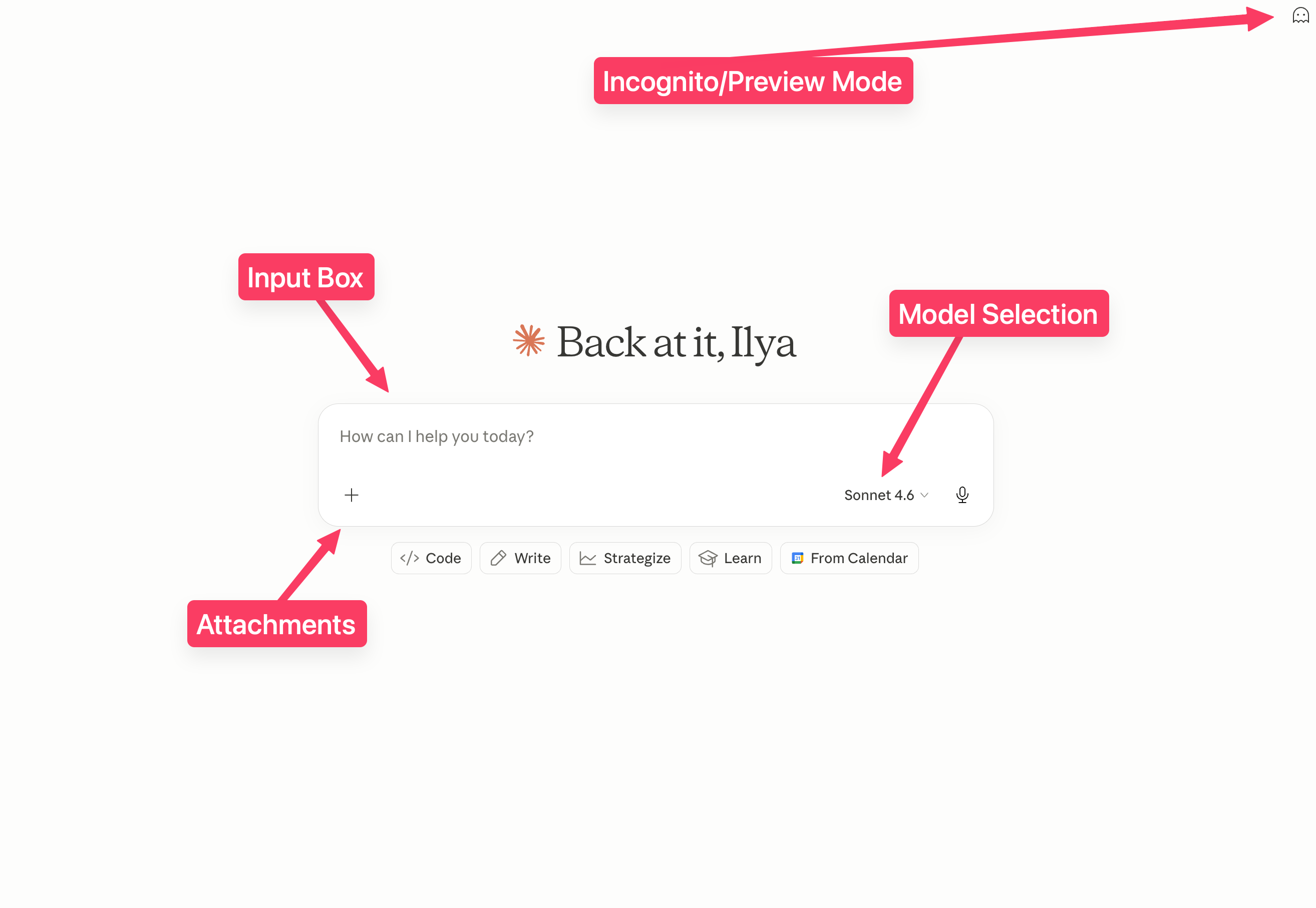
Useful for drafting an email, summarizing a document, getting an answer at 2AM when you cannot remember the difference between affect and effect. Nothing wrong with this. I used it this way for weeks before realizing I was barely scratching the surface.
But you are still doing all the heavy thinking yourself. Every prompt needs your attention. Every output needs a review. You are still the judge deciding whether it’s good enough.
Claude here is a fast helper and nothing more. If this is all you use it for, you are essentially renting a Porsche 911 to do grocery shopping.
Cowork - The delegate
This is where things get genuinely interesting.
Cowork is the second option on the desktop app, so switch to it now.
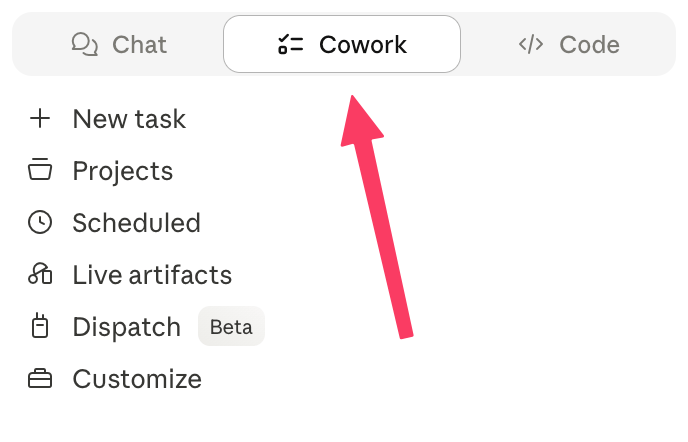
You operate inside project. This is how you create a project and attach to a folder on your computer:

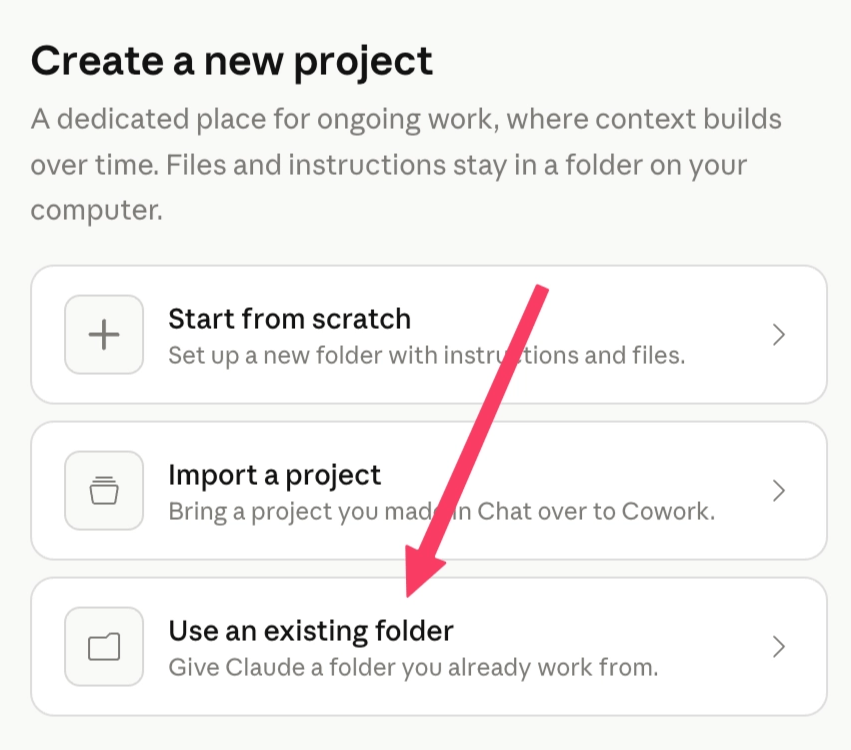
You connect it to your files and tools via Connectors, and it stops answering questions and starts doing the work for you. Client work in one project. Substack content in another. Each project carries its own context, its own connected services, its own history.
But the real unlock is Skills.
Skills are pre-built workflows that give Claude specific capabilities. A proposal drafted from a meeting transcript. A lead qualification table from a LinkedIn list. A weekly Substack engagement report ready by Sunday morning. Not prompts you rewrite from scratch every time and you chat back and forth on. Workflows you build once and trigger on command.
You describe what the workflow should do. Claude follows it every time. No variation, no re-explaining yourself.
Skills combined with scheduled tasks? I’ve automated roughly 30% of my content analysis work this way. The tasks are still there of course. I just stopped being the one doing them manually.
Then there is Dispatch. This is a nice tool if you don’t have access to your computer. So what it does is it pairs your Claude mobile app to your desktop. Send a task during your morning walk. Come back to something already finished on your screen.
At some point you stop being the person doing the work. You become the boss who says: “looks good, send it.”
Code - The builder
Let’s say you want to build something. A tool. An internal system. A product you have been sketching in your head for months.
Two years ago, that meant learning to code or hiring someone who could.
Now you use Claude Code.
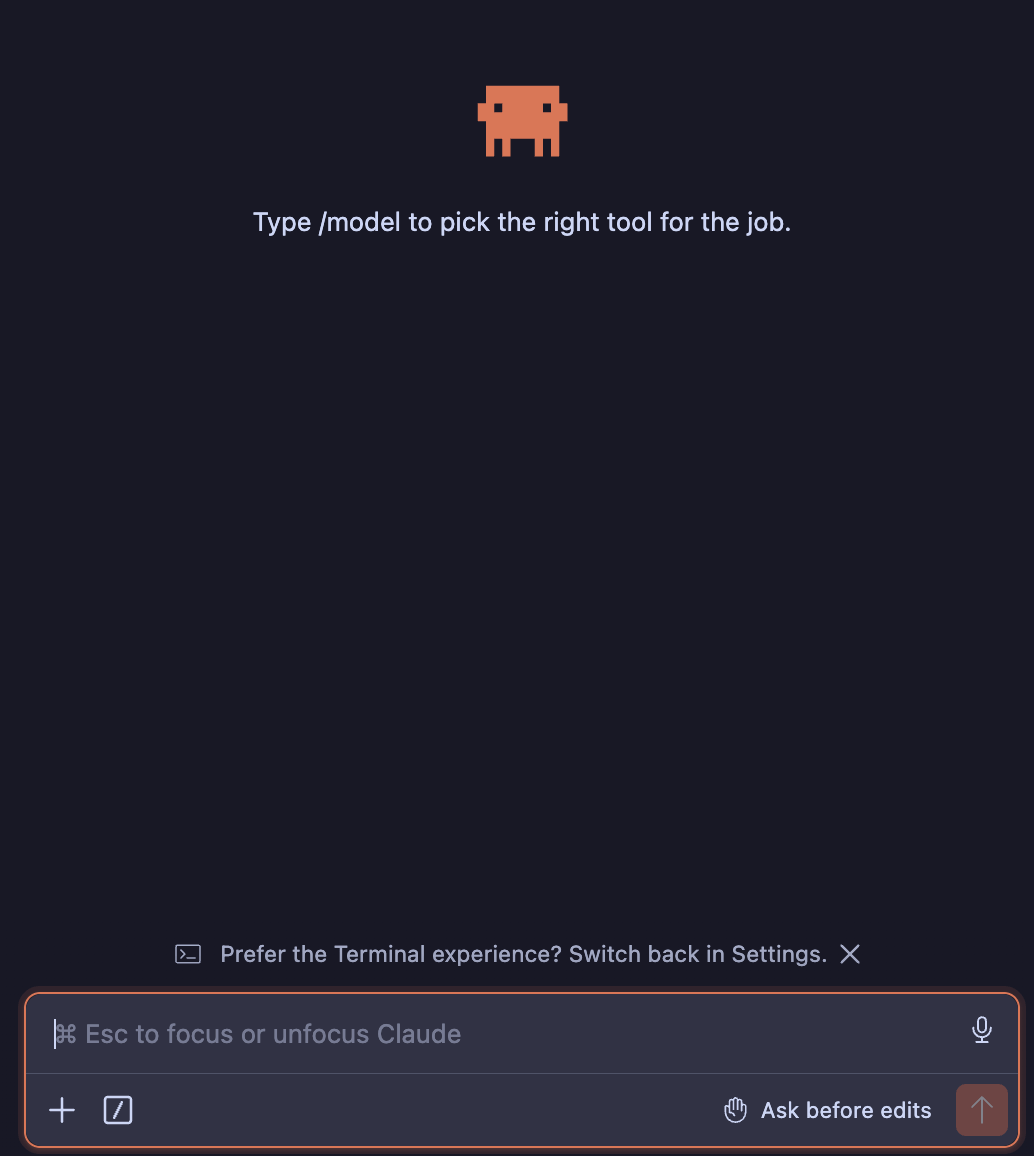
You describe what you want to exist. A website, a mobile application, a script that automates a workflow. Claude scaffolds it, writes the logic, connects the pieces, and hands you something working.
This is how non-developers ship internal tools they could not afford to outsource. How small agencies build client-facing systems without a full engineering team. How solo founders automate workflows they would have previously just worked around.
Ok. Enough framing. Here is what this actually looks like in practice.
Use case 1 - The customer support system
We recently signed a project with an e-commerce company that needed a customer support automation for writing emails based on a set of predefined documents. Small support team, growing inbox, writing the same categories of replies manually every single day.
The deal started with a 45-minute discovery call. In the past, that call would mean two hours of notes cleanup and proposal writing afterward. This time, the recording went into Cowork. n8n pulled the video, read the transcript, identified the discussed scope, the pain points the client described in their own words, and drafted a full structured proposal. Into Notion in under ten minutes.
The client saw a proposal that matched exactly what they said they needed.
We signed that week.
Use case 2 - The weekly report you actually read
Every Sunday for weeks I was sitting down for three hours going through my Substack notes manually. What got likes. What got replies. What flopped completely. Opening each post, copying numbers into a doc, trying to spot a pattern.
3 hours. Every week.
Then I built a reporting Skill in Claude that does it for me. It pulls all the engagement data automatically, cross-references what I published, and shows what is working based on engagement, likes, and a set of predefined benchmarks. More platforms are getting added and Threads is next.
Now it takes three minutes. In Notion by Sunday morning. I just open it over coffee.
Use case 3 - The lead machine
A B2B team at a SaaS was spending two full days a week manually vetting inbound leads. Detailed ICP in Notion, spreadsheet of names. Every lead meant opening LinkedIn, reading a website, making a judgment call, updating a row. About 80 times per week.
Now Claude takes the ICP, checks each lead against their LinkedIn and website, and returns a scored qualification table. Qualified, borderline, not qualified - short explanation for each.
Two days became under an hour. The judgment is still there. The clicking through LinkedIn 80 times is not.
Still thinking about that team. Two days a week, every week, going through the same motions. Not because they were bad at their job. Because no one had handed them a better one.
Most people are not stuck because they cannot learn this. They are stuck because Chat feels like enough. It is fast of course, it is easy to use, and it gives you something to show for the last twenty minutes.
But there is a version where you stop filling the week with tasks and start finishing the quarter with results. That gap is smaller than it looks.
If you want to get there, subscribe below.
If you want to learn how to build your own Claude Skills, comment “skill” below and I’ll walk you through it.
Chat soon,
Ilya
This is actually very helpful!
Interesting, thanks for sharing !
I like how you put the accent in practical use cases !