



Intro
Ok listen, I’m not a Substack growth expert or anything, but if you’re running a newsletter here, you can understand how challenging it might sometimes be to grow and acquire new subscribers.
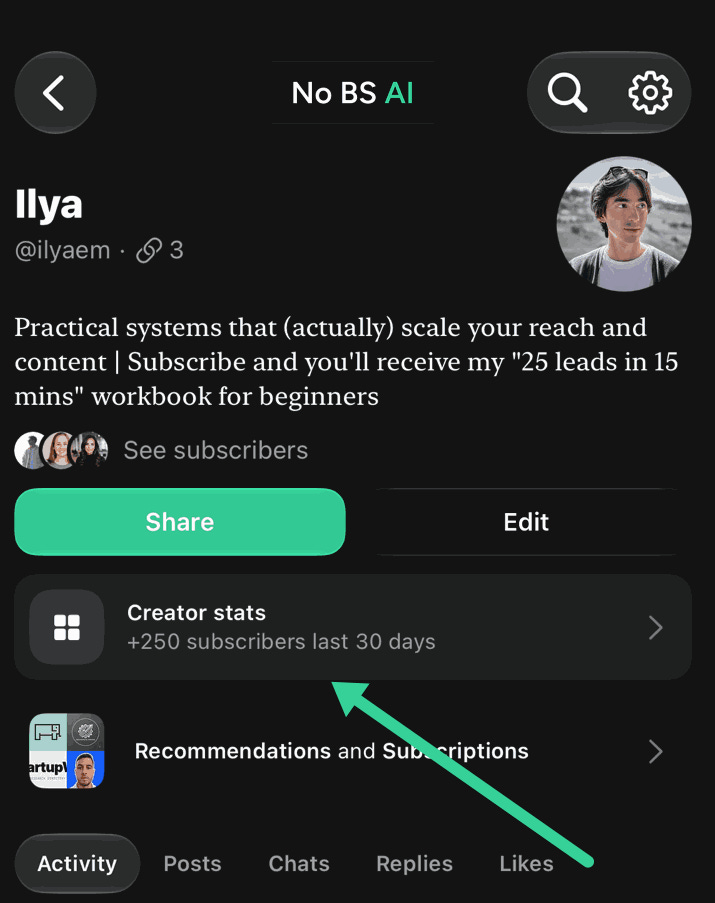
Not to brag but in just 1 month I got 250 new subscribers. 228 of them came from one move and the rest came from a second one that works alongside it.
So, here’s a couple of results:
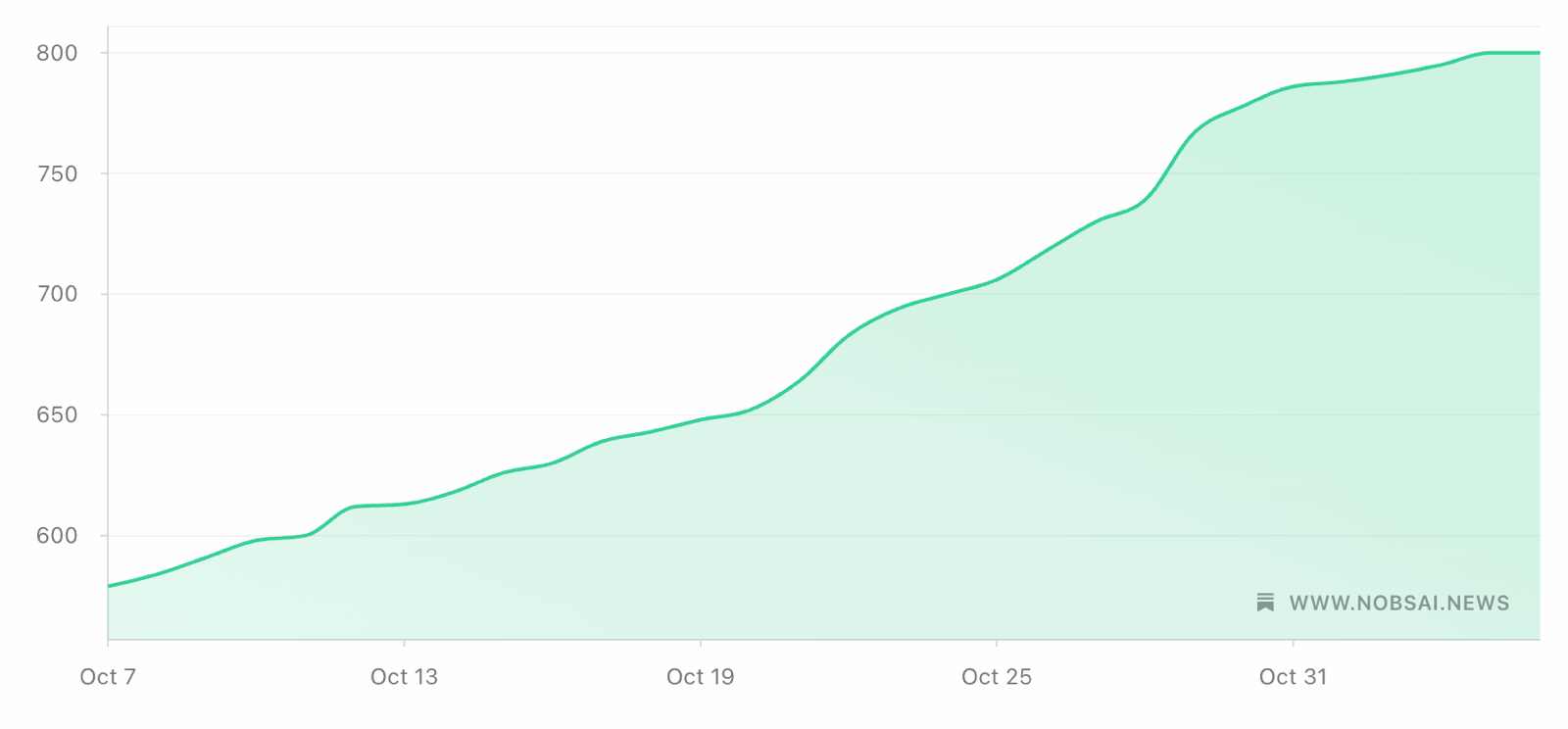
Just to mention, this is how my growth curve looked like as of the time of writing this article:
My story
Growing on Substack is hard as hell. There’s really no other way to put it.
You post Notes and nobody likes them. Nobody comments. Nobody seems to care about what you have to say.
You write four or five articles, put hours into each one, and somehow still end up feeling like you’re screaming into the void. You’ve got maybe 10 people reading your stuff, and everyone around you is fighting for the exact same attention.
I know the feeling because that’s exactly where I started.
I launched my newsletter, No BS AI, in March 2026 with absolutely nothing. Zero followers, zero subscribers, not even a single piece of content.
I’d spent a good chunk of 2025 posting on X, so I already had some idea of how the content game worked. But Substack, with its mix of long-form articles and Notes, was a different beast.
Still, I figured consistency would get me somewhere.
So I started posting three Notes a day and one article every two weeks, which eventually turned into one article every week.
And for at least two months, absolutely nothing happened.
Every single day felt like I was talking to myself. Nobody was reading, nobody was engaging, and I had no idea whether any of it would actually pay off.
But here’s the thing.
I had a background in software engineering and automation, and I genuinely believed I had something useful to share. So instead of giving up, I kept writing.
And somewhere along the way, I actually started enjoying it.
Fast-forward seven months, and I’ve experimented with pretty much everything. Super long technical deep dives, philosophical pieces, random experiments.
Eventually, I settled on what I do now: practical guides that people can actually use.
And the results?
I recently gained 250 subscribers in a single month, without spending a cent on paid ads.
Was it luck? Maybe some people would call it that.
But I think the system I built had a hell of a lot more to do with it.
See, during those early months, I was doing everything manually. Coming up with article ideas, figuring out what Notes to post, finding conversations to join, commenting, promoting my articles, reaching out to other writers.
It worked, but it was exhausting.
So I did what any software engineer obsessed with automation would do.
I turned the whole thing into a system.
A pretty damn good one, omg I’m excited.
One that handles much of the repetitive work behind organic subscriber growth, so I can spend more time actually writing instead of constantly worrying about how to get people to read what I write.
And that’s what I want to talk about.
Solution
You’ve probably heard the same advice a thousand times.
“Just write consistently and the subscribers will come.”
Yeah, I don’t buy that BS.
Don’t get me wrong, consistency matters. But consistency alone doesn’t get you subscribers.
Visibility does.
You can write the best article in your niche, but if nobody sees it, nobody subscribes. And publishing another 20 articles isn’t magically going to fix that.
Especially once you’ve built an audience of, say, 1,500 people. You can’t just assume the algorithm will keep handing you new readers forever.
And with Substack Notes no longer prioritizing accounts people already follow the way it used to, recommendations and restacks have become even more important for getting discovered by people who’ve never heard of you.
Which brings me to the interesting part.
After months of experimenting, I’ve found two things that actually move the needle when it comes to subscriber growth.
The first is swapping recommendations with other newsletter owners.
This one is huge.
Of the 250 subscribers I gained in that single month, 228 came from recommendations alone.
Not ads. Not some viral post. Just other writers putting my newsletter in front of their readers, isn’t that insane?
The second is what I call my connect routine.
It’s a process that finds relevant posts worth engaging with, helps me join conversations where my ideal readers already hang out, and gives me opportunities to promote my articles naturally.
Together, these two things became the backbone of my growth system.
And while I’ve automated a lot of the work, you absolutely don’t need automation to get started.
In fact, I’d recommend doing the first one manually before trying to automate anything.
Here’s how.
Start by finding newsletters in your niche, or at least close enough that their readers would genuinely be interested in yours.
Then look at their Recommendations tab. Are they recommending other newsletters? How many? Do those publications have anything in common with yours?
Once you’ve found a good match, send the writer a short DM.
Nothing fancy. Just introduce yourself, explain why your newsletters would be a good fit for each other’s audiences, and offer to recommend theirs in return.
That’s it.
The important part is keeping track of who you’ve contacted, because once you start reaching out to dozens of writers, things get messy fast.
I recommend using a simple tracker with one row per newsletter. Include the publication name, the writer, subscriber count, niche fit, outreach status, the date you reached out, and their response.
That way, you always know who you’ve contacted, who’s interested, and who you should follow up with.
Now, finding those newsletters manually can take forever.
So here’s a little shortcut.
In practice
I’m giving you one of the prompts you can use to kickstart this whole process, completely free.
Just open Claude or ChatGPT, turn on web search, paste in the prompt below, and replace the brackets with your own newsletter details.
It’ll help you build a list of 30 potential recommendation partners without spending hours digging through Substack yourself.
I run a newsletter on Substack called [NAME]. It is about [TOPIC] and my readers are [WHO READS IT]. I have [N] subscribers.

Find me 30 Substack newsletters that would be worth being recommended by. Use web search.

For each one give me:
- the name and the link
- roughly how many subscribers it has
- what it writes about, in one line
- how many other newsletters it recommends (the Recommendations tab on its page)
- why its readers would want mine, in one line
- fit: strong, adjacent or long shot

Rules:
- Its readers are the same people as mine or right next to them. If "we write about similar things" would be a stretch, leave it out.
- Between [MIN] and [MAX] subscribers.
- A newsletter that recommends many others beats one that recommends a few, so rank with that in mind.
- Leave out anything that sells what I sell, and anything that has not published in the last 30 days.
- If you cannot confirm a number, write "not sure".

Sort the list with the strongest fit first.
If you want the full growth build for your newsletter and get similar results as I got, ready to launch the same day you get it, comment “growth” under this post and I’ll build it for you.
Talk soon,
Ilya
Recommendations really help I think I sent you over 10 subs recently 😂